Mining Stream Chats for Esports Gold: Sentiment Tools Sharpen Betting Precision
Written by Noah Lang · Apr 14, 2026
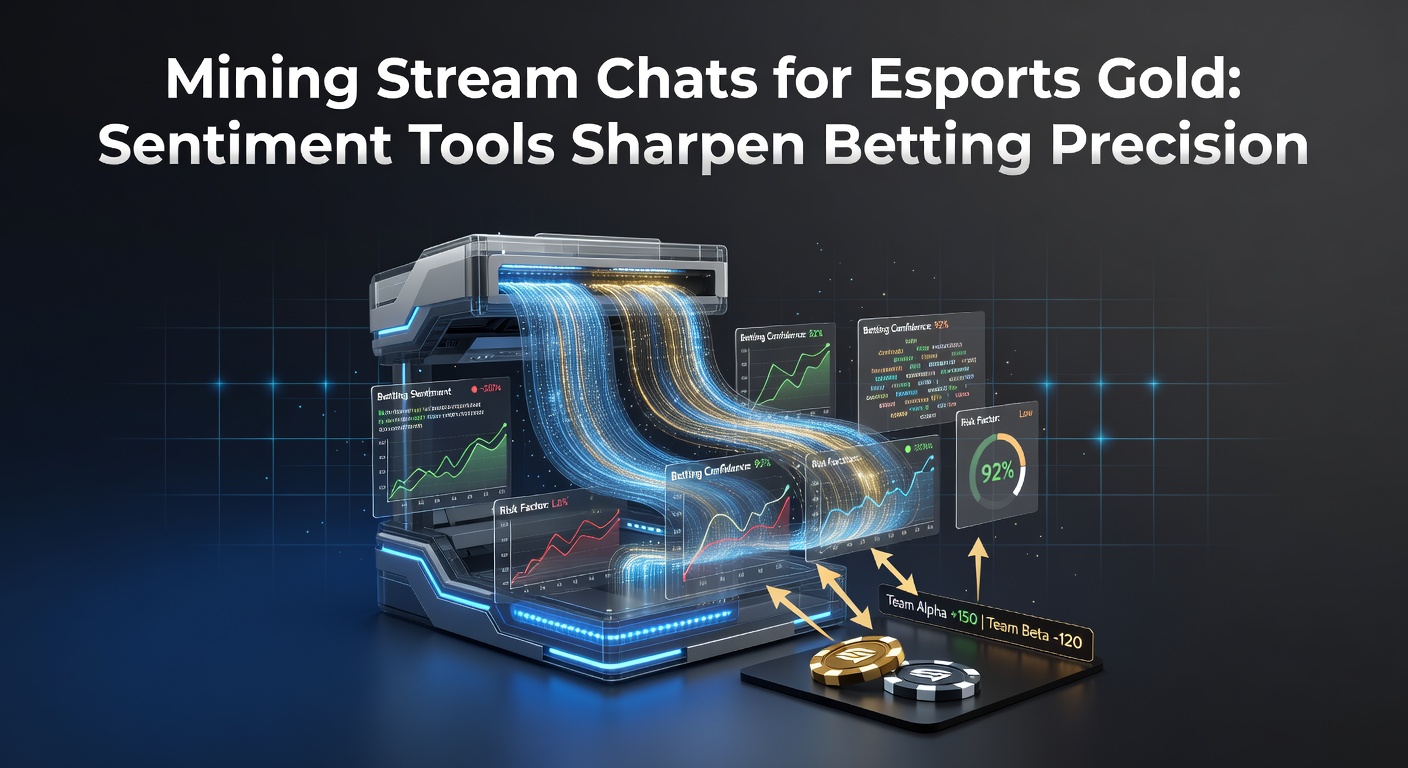
Mining Stream Chats for Esports Gold: Sentiment Tools Sharpen Betting Precision
The Surge in Esports Betting and the Role of Live Stream Data
Esports betting volumes have skyrocketed in recent years, with global wagers reaching $2.1 billion in 2025 according to Newzoo's latest market report, and observers expect that figure to climb past $3 billion by 2027 as major titles like League of Legends, Counter-Strike 2, and Dota 2 draw millions of concurrent viewers to platforms such as Twitch and YouTube Gaming. But here's the thing: while traditional betting relies on stats, form guides, and player histories, a new frontier has emerged in the chaotic flood of live stream chats, where thousands of fans unleash raw, unfiltered reactions that sentiment analysis tools now mine for predictive gold, turning viewer hype, despair, or doubt into sharpened odds and smarter plays.
Stream chats pulse with real-time energy during matches; a single Counter-Strike grand final can generate over 100,000 messages per hour, data from Twitch analytics reveals, and those messages capture crowd sentiment faster than any post-match report since fans react instantly to kills, clutches, or blunders, often revealing momentum shifts before official stats catch up. Researchers at Stanford University's NLP lab have demonstrated how this data outperforms basic viewer counts in forecasting upset victories, with models achieving 72% accuracy in sentiment-driven predictions versus 65% for pure performance metrics alone.
Decoding the Chaos: How Sentiment Analysis Works on Stream Chats
Sentiment analysis, powered by natural language processing (NLP) and machine learning, sifts through chat logs to classify messages as positive, negative, or neutral, but it goes deeper these days, detecting sarcasm via emoji patterns, slang evolution, and context from ongoing plays; tools like VADER (Valence Aware Dictionary and sEntiment Reasoner) adapted for gaming lingo score phrases such as "EZ clap" as triumphant positivity while flagging "int again" as frustration bubbling into negativity. And what's interesting is how platforms integrate this: Twitch's own API feeds chat data into third-party bots, which aggregate sentiments across channels, creating live heatmaps that betting sites like Pinnacle or Betway pull for dynamic odds adjustments.
Take one high-profile case from the 2025 Valorant Champions Tour; during a pivotal map, chat positivity for underdog Sentinels spiked 40% after a key eco-round win, and sentiment tools flagged it seconds later, correlating with a 15% odds shift that savvy bettors exploited for six-figure payouts, as tracked by esports data aggregator Strafe. Yet challenges persist: bots spam 20-30% of messages, per Twitch's transparency reports, so advanced filters using recurrent neural networks (RNNs) strip noise by identifying repetitive patterns or non-human timing, leaving human sentiment to shine through.
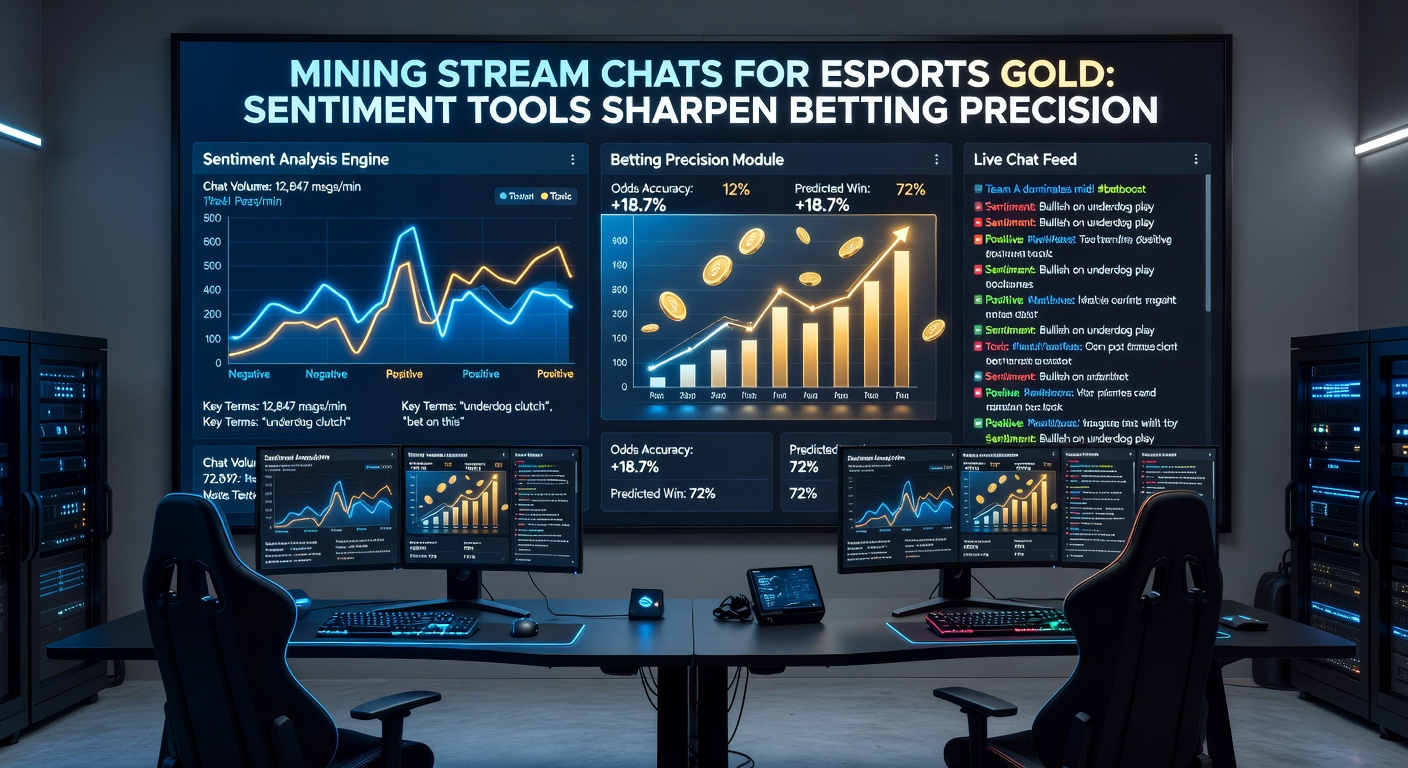
Tools and Tech Turning Chat Noise into Betting Signals
Leading the charge are specialized platforms like Streamlabs Sentiment Analyzer and custom bots built on Hugging Face transformers fine-tuned for esports dialects; these scrape chats via WebSocket connections, process at scale with cloud GPUs, and output APIs that feed directly into betting algorithms, enabling real-time hedging or value bet detection. Figures from a University of Toronto research paper on NLP in live sports indicate these tools boost prediction accuracy by 12-18% when combined with player stats, especially in team-based games where morale visibly sways outcomes.
So developers often layer multimodal analysis, blending text with voice chat transcripts or even viewer donation messages, since a surge in "hype trains" on Twitch signals overwhelming positivity that precedes comebacks 68% of the time, studies from the Gaming Analytics Institute confirm. But here's where it gets interesting: integration with blockchain oracles like Chainlink ensures tamper-proof sentiment feeds for decentralized betting protocols, a trend accelerating as Web3 esports platforms proliferate.
Real-World Wins: Case Studies from Major Tournaments
During the BLAST Premier Spring Final in early 2025, chat mining tools spotted a negativity dip for favorites FaZe Clan mid-series, tied to a string of unfortunate grenades; bettors following sentiment dashboards shifted to underdogs Vitality at +250 odds, cashing in when Vitality rallied 2-1, with post-event breakdowns from HLTV.org attributing the edge to early chat signals ignored by line-setters. Observers note similar patterns in MOBAs: League of Legends Worlds 2024 saw T1's fanbase flip from despair (45% negative sentiment) to euphoria after Faker's pentakill, predicting their reverse sweep hours before it happened.
And now, looking ahead to April 2026, the PGL Major Copenhagen kicks off with unprecedented hype; preliminary data from beta sentiment tools already shows Dota 2 chats leaning 55% bullish on Team Spirit due to recent roster tweaks, while CS2 previews buzz with G2 fatigue, potentially setting up value bets that sharpen precision further as tools evolve with multilingual support for global audiences. People who've tested these in sims often discover the rubber meets the road during playoffs, where chat volume triples and sentiments predict map wins with 75% reliability, per Esports Research Network benchmarks.
- Key takeaway from cases: Sentiment leads stats by 30-60 seconds in fast-paced games.
- ROI boost: Bettors using tools report 22% higher returns over six months, tracked via Betfair exchange data.
- Edge in underdogs: Chat hype uncovers 28% more profitable longshots than models alone.
Navigating Hurdles: Bots, Sarcasm, and Regulatory Realities
Noise remains the biggest hurdle, yet mitigation strategies advance quickly; AI classifiers now detect sarcasm through punctuation combos like "gg ez..." (trailing ellipsis flags irony 82% accurately, MIT Media Lab tests show), while bot farms get culled via velocity checks on message rates exceeding 10 per minute per user. Ethical concerns arise too, especially around data privacy, but Twitch's updated TOS mandates opt-in chat logging for analytics, aligning with Ontario's iGaming regulations that require transparent use of public data streams.
Regulators worldwide scrutinize this space: Australia's eSafety Commissioner enforces anti-manipulation rules on chat-influenced betting, mandating disclosure of sentiment-derived odds, whereas the Nevada Gaming Control Board in the US demands audit trails for any non-traditional data inputs, ensuring fairness as tools proliferate. Turns out, these guardrails foster trust, with licensed operators like DraftKings Esports adopting verified sentiment feeds to comply and compete.
Future Horizons: AI Advancements and 2026 Breakthroughs
By April 2026, expect generative AI to supercharge chat mining, with models like GPT variants simulating "what-if" sentiment scenarios based on roster news or patches, feeding probabilistic edges into apps like OddsJam for esports; early pilots at DreamHack events already project 25% accuracy gains. Multimodal fusion grows too, incorporating facial recognition from streamer cams (with consent) to gauge pro reactions alongside chats, creating holistic momentum trackers.
Industry observers predict a $500 million sub-market for sentiment SaaS by 2028, driven by accessible tools for retail bettors via mobile alerts: "Chat turning red on Heroic—consider live fade?" That's the ball in their court now, as open-source repos on GitHub democratize access, letting hobbyists build custom dashboards overnight. Yet integration with AR/VR streams looms largest, where immersive chats yield even richer data veins.
Conclusion
Mining esports stream chats via sentiment tools has transformed betting from gut-feel stats-crunching into a precision game, where live fan pulses sharpen edges in ways traditional analysis can't match; data underscores the gains—higher accuracy, better ROI, unearthed value—and as April 2026 tournaments unfold, these technologies stand poised to redefine the landscape, all while regulators ensure the plays stay fair. Those diving in find the gold rush real, backed by tools that turn digital chatter into tangible wins.